
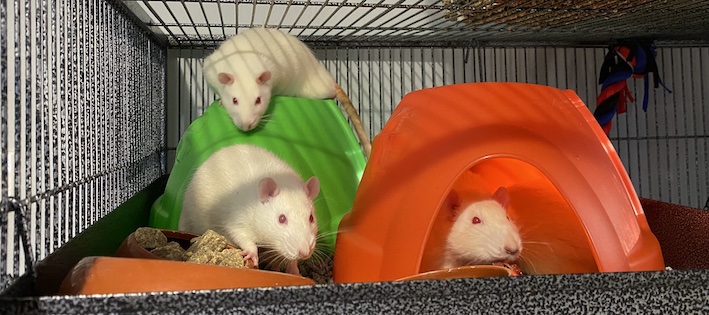
At Liberty Foundation we receive some beautiful rats from research facilities and over the years we’ve learnt a thing or two about what makes the perfect home for our rodent friends.
We wanted to share with you some tips on providing the best accommodation and lifestyle for rats, who we usually rehome as compatible trios.
If you’d like to express your interest in adopting or fostering rats just fill out our form here.
Housing
There are three types of housing that we believe make the best homes for rats and ensure that they are kept happy, comfortable and stimulated.
For 2-4 rats we recommend the large cages on wheels that are around 140-160cm tall by 50-60m deep and 80-100cm wide.
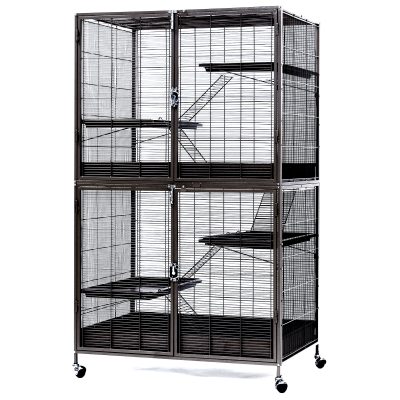
Just ensure you have ladders or hammocks to enable the rats to reach all levels of the cage. We especially like these cages because you can build a simple corflute or perspex base in them to contain a digging box (see more on digging boxes below).
These are the cages we will accept for adoption of three or more rats:
Budtrol Trading: Four-level mega cage or Multi-tier cage
Vevor: Critter Nation style cage
Crazy Sales: Four-level deep tray cage
For two rats you could use a slightly smaller cage but only if they will spend a good amount of time outside of the cage. Also be mindful of having large doors to enable easy access and cleaning.
Smaller cages are fine to use if your rats have their own area or room and you leave the cage door open for them to come and go, for example.
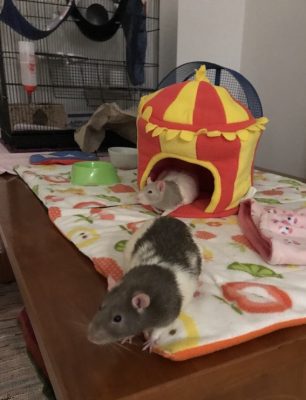
There are many places online where you can purchase these types of cages so shop around as there is a great variation in price. It’s generally cheaper to purchase online than from retail stores. Better still, buy them second hand on forums like Facebook Marketplace.
One important thing to remember: Ensure the bar spacing (and any other gaps) are not wider than 1.5cm apart for adult rats. If your rat can fit their head through a gap, then they can get their body through!
Design
We like to include all kinds of fun things for our rats to do. Although we like them to have time outside their cage every day for a safe free-roam experience or snuggle with their owner, it’s good to provide a roomy and varied cage environment for them to explore overnight.
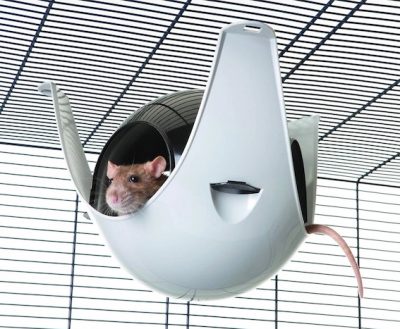
Your cage design can be as creative as you like and the sky is the limit. It’s advisable to have plenty of hiding areas, like wooden or plastic houses, hammocks or even cardboard boxes. One of our favourites is the large Sputnik (see pic below) – it’s easy to clean and they love lounging in it.
Aside from places to rest and hide, there should be opportunities to jump and climb. We recommend ladders, thick ropes, rattan, dried logs or branches, hanging baskets and seagrass matting. You can offer a running wheel but most rats are not that interested in them.
Just remember, wherever there is a surface your rat will be walking along that is metal grids or mesh, just cover it in order to protect their feet. Rats that walk on mesh can get very sore feet otherwise known as bumblefoot. You can cover metal grids or mesh with fabric or cloth (attached with cable ties or bulldog clips) or weave rattan through it.
It is a natural behaviour of all rodents to dig and we like our rats to have the opportunity to do this, either in hemp fibre bedding or coir peat (which you can buy cheaply from Bunnings and rehydrate with water). You can also fill a digging box with shredded paper. Just stay away from anything that will create dust as this can hurt their lungs.
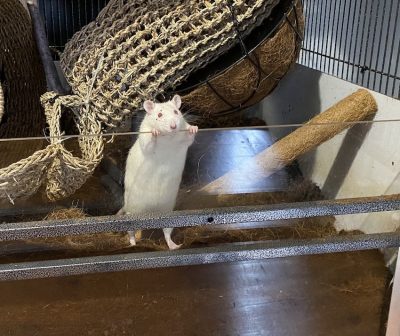
It’s also important not to include anything in their cage environment with a strong scent as this can also affect their breathing.
Always bear in mind that you want to create an environment for your rats that is safe, comfortable and fun but also easy to maintain You don’t want to spend the whole time cleaning! One good thing is that rats are generally very clean and will use a litter box if you provide one – a large, shallow plastic container is fine, filled with a paper pellet litter or something similar. You can line the bottom of your cage with newspaper or paper towel and just change this every few days.
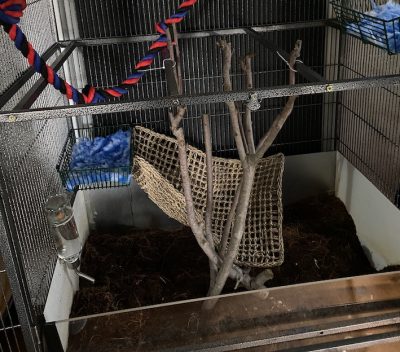
It’s not recommended to get into their nesting areas and clean them out every day because this can upset them. It’s best to spot clean during the week and then do a bigger clean once a week to change their bedding and clear out any food or tasty treats they may have stashed away! Some rats will stash, some won’t, it just depends on their nature.
Location
The best place for rat housing is inside your home. They don’t generate any odour (if you keep their environment clean) so it’s easy to keep them near you and they also enjoy the chance to interact with you. Also, you don’t need to clean or wash your rats, they can take care of that themselves! If they are looking scruffy or ungroomed it can in fact be a sign that they’re not feeling too well.
Unless you want to be kept up all night (or you are a heavy sleeper) we wouldn’t recommend having them in your bedroom. Rats are nocturnal and are mostly active from dusk until dawn.

We don’t recommend having them in garages as it is too difficult to control the temperature and humidity and they often get too hot.
As a general rule of thumb, if you find an environment too hot or cold, then your rats will as well. They like a temperature range around 15-26 degrees Celsius.
Make sure you also don’t house rats in noisy or busy environments as this may frighten them or disturb them during the day when they are resting. With albino (pink eyed) rats it’s also good not to have harsh overhead lighting or direct sunlight as this will damage their eyesight.
If you are allowing your rats free-roam time, just ensure they are safe and contained, away from other animals or situations where they may get injured. It’s not advisable to take them outdoors.
Health
Our rats are generally not desexed so they are rehomed in same-sex groups, although there are benefits to desexing such as greater longevity and less age-related health issues.
We can always advise on good exotics vets who will assist you with desexing or any health issues your rat may experience during their life.
We usually get albino female rats of the Sprague Dawley or Wistar strains. Occasionally we receive hooded rats which are multi-coloured with dark eyes. The lifespan of our rats is generally 2-2.5 years if they maintain good health.
Our rats do not have mycoplasma (respiratory illness) which can be present in other rats. We are therefore very careful about rehoming them in places with other rats. This is possible as long as you are willing to keep the ex-research rats separate from other rats with their own caging and equipment. If you do have other rats with symptoms of mycoplasma you just need to be careful about not transmitting this, by washing your hands and disinfecting food bowls etc.
If your rat was to develop mycoplasma we can provide advice on the best treatment options available to help manage the condition and extend their life.
Shopping list
Here’s a list we’ve put together to help you in setting up and maintaining your rat enclosure.
Cages – see our links listed above for recommended caging.
Tray/platform liners – we use newspaper or other types of paper as our rats tend to chew fabric floor coverings. If the platforms in your cage are made from metal mesh, you need to cover them with fabric to provide a hard, flat surface for the rats to walk on, otherwise they will get very sore feet.
Furniture – we use hard plastic structures like Sputniks (see picture above), plastic igloo hides etc. We tend not to use wooden houses/hides just because they absorb urine etc. but they are generally safe to use.
Bedding – we use different types fabric hammocks from Temu or Australian suppliers and you can make your own if you’re skilled at crafts and sewing. Rats love being up high and suspended, it’s comfortable, makes them feel safe and helps them bond with their rat friends.
Hiding areas – it’s important to always provide hiding areas for rats to ensure they feel safe. There should be one or two at ground level and then others that are higher in the cage or suspended. An inexpensive supply of hides is cardboard boxes you can source for free from places like Bunnings. Just ensure boxes haven’t been used to store dangerous chemicals or paint etc. You can line boxes with paper towel just to make them more comfortable for the rats to sit on and provide them with something to shred and make a nest.
Stuff to chew – rats need to keep chewing to keep their teeth healthy. We give them lots of cardboard and paper, which they often shred for nesting areas etc. You can give them wooden blocks but only buy the ones that are safe for rats and can be sourced online from a variety of suppliers.
Water/food containers – you can easily buy inexpensive water bottles online at pet outlets or sites like Temu etc. It’s often good to have two sippers in use, so it’s convenient for the rats and provides a back up if one fails. We don’t recommend using water bowls as the water tends to get fouled very quickly. We use stainless steel hanging bowls for their fresh food and pellets, but you could use ceramic bowls- just get heavy ones they can’t easily tip over. You can give rats puzzle feeders as well but these should only be given in addition to their easily accessible food, as a form of mental stimulation or enrichment.
Litter tray – rats like to use one area of the cage predominantly for going to the toilet. We use hard plastic containers you can buy cheaply from Kmart or Big W for example. Just avoid plastic that is too soft and they can easily chew through. We use paper pellets as bedding in litter boxes like Breeders Choice brand, which is widely available, you can also use hemp fibre (Aubi Zoo or Mini Hemp brand), spruce or aspen wood shavings, avoid pine though.
Food – rats can have a constant supply of pelletised food to graze on, we use Rodent Origins from Vetafarm, which you can buy easily online. They should also have fresh food daily, including vegetables and a carbohydrate option. For example, we feed our rats a diet that can be sourced from any supermarket:
Four leaf salad mix with grated carrot + other chopped veges like capsicum, celery, radish, herbs
Corn or rice thins
Once per week they also receive: steamed rice or pasta; corn on the cob; yoghurt and fruit.
They get occasional treats like popcorn, nuts or rolled oats.
If you’re not sure if you can give your rat a specific food, just Google it first, there are great resources online to help rat owners.
Note: It’s not recommended to cover cages with cloth like people often do with bird cages, or use those wrap around protectors at the base of cages to stop litter falling out, as the rats tend to pull them inside the cage and chew them. Remember, anything you put on top or around the cage is fair game for rats to shred, and they will!

Final thoughts
There are some fantastic channels on YouTube explaining best practice in keeping and caring for rats.
While there might be an initial outlay in setting up the ultimate rat paradise, it’s worth it in the long run because these systems are durable, easy and inexpensive to maintain, and will ensure your little mates remain happy and healthy for the duration of their lives.
We’re always here to help and offer advice on where you can get more information or purchase supplies for these delightful critters.
Just reach out anytime to have a chat – hello@libertyfoundation.org.au
If you’d like to express your interest in adopting or fostering rats just fill out our form here.